


Blog
Blog
Industry News
Company News

How to resolve abnormal phenomena such as sludge floating and excessive foam production in an anaerobic tower?
Release time:
2024-08-12 15:05
In wastewater treatment, the anaerobic tower is a crucial processing facility. It utilizes anaerobic microorganisms to convert organic pollutants into harmless substances. However, anaerobic towers sometimes exhibit abnormalities such as sludge floating and excessive foam production. If these issues are not addressed promptly, they may affect wastewater treatment efficiency and equipment operation.
First, when encountering sludge floating, we need to thoroughly analyze the cause. One possibility is excessive gas production within the anaerobic tower, causing the sludge to float. In this case, check if the influent water quality has changed, such as an excess of readily degradable organic matter, leading to vigorous microbial metabolism and significant gas production. If this is the cause, adjust the influent organic load, control the influent flow rate and concentration, and prevent a sudden surge of organic matter into the anaerobic tower. Alternatively, sludge floating may be due to sludge aging or excessive filamentous bacteria growth. For sludge aging, remove some aged sludge and supplement new activated sludge to maintain sludge activity and good settling properties. If filamentous bacteria overgrow, adjust operating parameters such as increasing excess sludge discharge and controlling nutrient ratios to inhibit their growth.
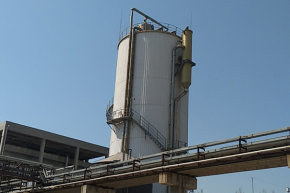
Second, excessive foam production can also have complex causes. It may be due to surfactants in the influent, which easily produce foam during anaerobic processes. Consider adding a pretreatment step to remove or reduce surfactant levels in the influent. Excessive foam may also be related to excessively long sludge retention time in the anaerobic tower. If so, adjust the sludge retention time to ensure normal sludge renewal and metabolism. Also, check if the anaerobic tower's mixing system is functioning properly; good mixing prevents local sludge accumulation and gas buildup, reducing foam production.
Regular monitoring and maintenance are crucial in addressing these abnormalities. Regularly check parameters within the anaerobic tower, such as pH, temperature, and redox potential, ensuring they remain within the appropriate range. If the pH deviates, take corrective measures, such as adding acid-base buffers. Temperature fluctuations can also affect sludge activity and gas production; ensure effective insulation to maintain relatively stable temperatures.
Furthermore, the operators' expertise and experience are key to problem-solving. They need a thorough understanding of the anaerobic tower's operating principles and potential problems, accurately identifying root causes and implementing effective solutions. Establish comprehensive contingency plans and procedures to respond quickly to abnormalities and prevent escalation.
In summary, when an anaerobic tower exhibits abnormalities like sludge floating or excessive foam, we must scientifically analyze the causes and implement targeted solutions. Strengthen daily monitoring and maintenance, improve operator expertise, and ensure stable and efficient anaerobic tower operation for reliable wastewater treatment, protecting our environment and achieving sustainable water resource utilization. This allows the anaerobic tower to better fulfill its crucial role in wastewater treatment, creating a cleaner and better living environment.
Anaerobic tower
Previous page
Practical application of IC tower in food processing wastewater treatment
Wastewater from the food processing industry contains a large amount of organic matter, suspended solids, and oils. Traditional treatment methods often face problems such as high energy consumption and long processing cycles. The IC tower (internal circulation anaerobic reactor), with its unique internal circulation structure and three-phase separation system, demonstrates technical adaptability in treating high-concentration organic wastewater. The core advantage of the IC tower lies in its internal circulation mechanism. Through the fluid movement of the internal rising and falling pipes, it achieves thorough mixing of sludge and wastewater, improving biodegradation efficiency. In food wastewater treatment, the IC tower can adapt to influent conditions with a wide range of COD concentrations, especially suitable for the dairy, meat processing, and brewing industries. Practice has shown that when treating oily wastewater, the IC tower can stably achieve a COD removal rate that meets emission standards by reasonably controlling the hydraulic retention time and organic load. In an actual engineering case, a large seasoning production enterprise used the IC tower as a pretreatment unit. The influent COD concentration ranged from 8000-12000mg/L, and after treatment by the IC tower, it was reduced to below 1500mg/L, significantly reducing the burden on the subsequent aerobic treatment unit. The operating data shows that the biogas yield of the IC tower is stable and can be used for energy recovery, further reducing treatment costs.
The effectiveness of IC tower in treating high-concentration organic wastewater
The IC tower (internal circulation anaerobic reactor) is an important piece of equipment in modern wastewater treatment, demonstrating significant technical characteristics in treating high-concentration organic wastewater. Its unique internal circulation system enhances the contact efficiency between sludge and wastewater, making the organic matter degradation process more thorough and showing clear adaptability in treating industrial wastewater with a COD concentration exceeding 3000 mg/L. The treatment effect of this technology is mainly reflected in two dimensions: organic matter removal rate and biogas production. Actual operating data shows that in wastewater treatment for industries such as brewing and food processing, the IC tower usually maintains a high COD removal rate. The granular sludge formed inside the reactor has good settling performance, ensuring the stability of system operation. When the temperature is controlled around 35℃, the microbial activity reaches an optimal state, and the treatment effect is relatively ideal. In the process of treating high-concentration organic wastewater, the volumetric loading capacity of the IC tower is a key indicator that distinguishes it from traditional anaerobic processes. Due to its multi-stage reaction zone design and internal circulation flow pattern, the equipment can withstand high organic load shocks. Pharmaceutical wastewater treatment cases show that the system can still maintain stable operation when the influent COD fluctuates between 5000-8000 mg/L.
In the back-end process of semiconductor manufacturing, the IC handler (integrated circuit testing and sorting equipment) plays a core role in verifying chip functions and screening for quality. Its working principle is to use a precision robotic arm to send wafers or packaged chips to the testing station, and use the probe card and tester to complete the electrical parameter measurement. Then, according to the test results, it automatically sorts out qualified products and defective products. This integrated "test-judgment-sorting" process makes it a decisive link in the quality control before the chip leaves the factory. From a technical perspective, the gatekeeping role of the IC handler is reflected in three dimensions: First, the contact testing scheme can simulate the actual working state of the chip and detect physical defects such as open circuits, short circuits, and leakage; second, the multi-station parallel testing architecture achieves the screening capacity of thousands of chips per unit time, matching the production capacity needs of the packaging and testing factory; more importantly, its test data is directly related to the yield statistics of the chip, providing key evidence for process improvement. Current mainstream equipment supports environmental temperature testing from -40℃ to 150℃, covering the reliability verification needs of different application scenarios such as consumer electronics and automotive electronics. In industrial practice, the testing standards of IC handlers are often more stringent than the terminal application conditions. Taking the case of a major packaging and testing factory as an example
Contact Information
Address: No. 104, Unit 1, Building 2, Far East Ocean Tide Xuan Center, Tangye Street, Licheng District, Jinan City, Shandong Province

Mobile Website

WeChat Customer Service
Shandong Zhiyuan Environmental Engineering Co., Ltd. Copyright reserved This website supports IPV4&IPV6 dual-way access